

Top Picks: best credit cards no annual fee USA Options
You probably feel torn between chasing big sign-up bonuses and keeping your wallet simple. This guide meets you where you are: practical, honest, and focused on real wins you can use today.
We’ll walk you through top $0 annual fee picks across cash back, intro APR deals, travel perks, and business options. Expect clear steps, shortlists, and real examples using cards like Chase Freedom Unlimited, Chase Freedom Flex, Wells Fargo Active Cash, and Citi Double Cash.
You’ll learn how to match a card to your everyday purchases, use intro APR windows to stretch large buys over 15 months, and turn routine spending into cash back and rewards. We’ll link to StudyFinance Credit Cards 101 and Cash Back Strategies so you can dig deeper. Authoritative issuer terms will be noted with nofollow, and four photos with descriptive alt-text are included later.
💰 Essential Finance Basics Guide
Build strong financial foundations: budgeting, saving, managing debt, credit building, and long-term money strategies.
Explore Finance Guide →Table of Contents
- Your search intent decoded: what “best credit cards no annual fee USA” means right now
- Editor’s shortlist: best overall no annual fee cards for everyday value
- Photo gallery: real-life moments your card can simplify
- Max cash back picks with
- Intro APR purchases and balance transfers: best
- Travel-ready no annual fee cards for occasional explorers
- Airline and hotel options with no annual fee
- Retail and lifestyle standouts you’ll actually use
- Business owners: best
- How to choose the right card for you
- best credit cards no annual fee USA: comparison table you can scan in seconds
- Application strategy: improve approval odds before you apply
- Action plan to maximize every purchase
- Responsible use: keep the
- Related guides to explore on StudyFinance
- Verify details and learn more from trusted sources
- Your next step toward smarter swipes
Your search intent decoded: what “best credit cards no annual fee USA” means right now
Start with a quick spend audit to see if flat rewards and no renewal costs beat a waived-first-year perk. You want steady value on everyday purchases without juggling credits or tracking break-even math.
Who no-annual-fee options fit best
If you pay your balance in full and prefer simple cash back on groceries, dining, gas, and transit, a $0 option often wins.
Choose this path if you dislike tracking statement credits or activation windows and want predictable returns on routine purchases.
When a low-fee or waived first-year cost might outperform $0
Cards that waive the first year let you test perks like Global Entry statement credit or travel protections. Examples include Amex Blue Cash Preferred ($0 first year, $95 after) and United Explorer ($0 first year, $150 after).
| Card | First-year cost | Key perks | Best if |
|---|---|---|---|
| Amex Blue Cash Preferred | $0 | Higher grocery cash back | You shop a lot at supermarkets |
| United Explorer | $0 | Travel credits, checked bag | You use airline perks within first year |
| $0 annual options | $0 | Flat cash back, intro APR offers | You want simple, ongoing rewards |
Editor’s shortlist: best overall no annual fee cards for everyday value
For steady returns and flexible intro APR windows, consider three reliable options that suit most daily spending habits.
Chase Freedom Unlimited: all-around cash back and intro APR (terms apply)
Why pick it: 5% on travel booked through Chase Travel, 3% on dining and drugstores, and 1.5% on other purchases. You can earn a $200 bonus after $500 spend in the first 3 months from account opening.
Perks: 0% intro APR for 15 months on purchases and balance transfers and $0 annual fee. Monitor the variable APR (18.99%–28.49%) and plan short-term financing around the intro apr window.
Wells Fargo Active Cash: flat 2% cash rewards with $0 annual fee
Why pick it: Unlimited 2% cash back on all purchases. Simple setup and easy redemptions make it ideal for everyday spend.
Perks: 0% intro APR on purchases and balance transfers for 12 months. Regular APR ranges across tiers, so pay in full when possible to protect your rewards.
Citi Double Cash: simple 2% back when you buy and pay
Why pick it: Earn 1% at purchase and 1% when you pay, rewarding disciplined repayment. There’s a 0% intro APR on balance transfers for 18 months and $0 annual fee.
Perks: Great if you automate payments. Watch the variable APR (17.99%–27.99%) so interest doesn’t erase your rewards.
- Use Chase Freedom Unlimited to capture higher rates in dining and drugstores and leverage the $200 bonus in the first months after account opening.
- Keep Wells Fargo Active Cash as a set-it-and-forget-it 2% flat-rate option for everyday purchases.
- Choose Citi Double Cash if you pay promptly to secure that extra 1% on back purchases.
- Always verify current terms on issuer pages and read StudyFinance’s Cash Back Strategies to maximize how you earn cash back.
Photo gallery: real-life moments your card can simplify
Small, routine purchases can turn into steady returns when you use the right card at the right time. Below are four scenes that show how daily spending stacks into meaningful cash back and rewards.
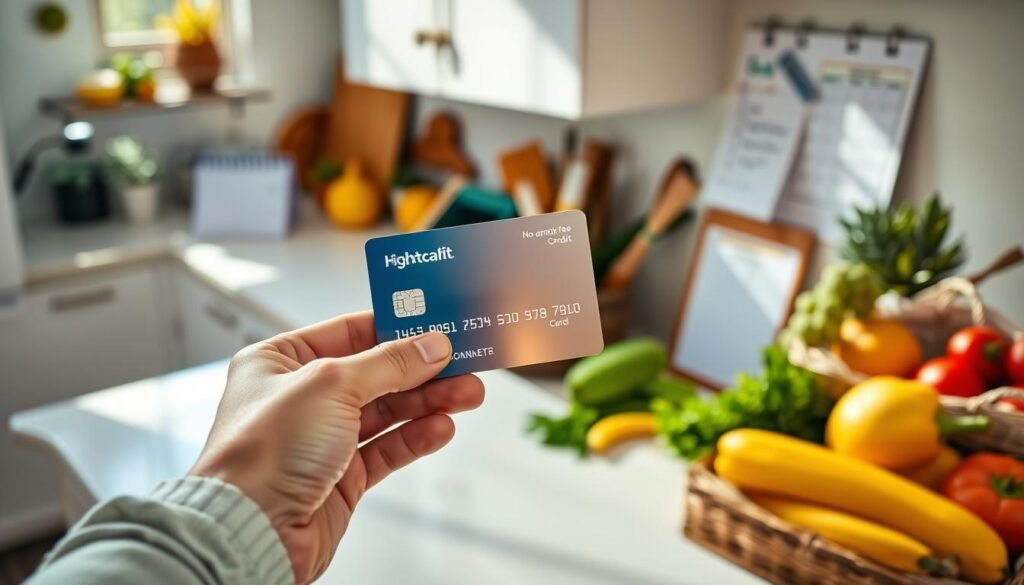
Grocery checkout
Tip: Put supermarket spend on a category card or a flat-rate option to make every purchase count. Category cards like Flex or Discover sometimes boost grocery and gas stations for select quarters.
Pharmacy run
Tip: Freedom Unlimited earns 3% at drugstores and dining. Use it during pharmacy trips to earn rewards quickly on routine refills and health purchases.
Dining out
Tip: Put meals, takeout, and delivery on your top dining earner and stack limited-time merchant offers. Digital wallets help you capture wallet-linked promos and speed checkout.
Online travel booking
Tip: Book flights and hotels through issuer travel portals to maximize portal bonuses Freedom Unlimited can earn 5% on travel booked through Chase Travel.
"Small, frequent buys add up: track monthly totals and you’ll be surprised how much cash back appears."
| Use case | Best move | Typical earn | Quick tip |
|---|---|---|---|
| Groceries | Category or flat-rate card | 2%–5% cash back | Activate quarterly categories |
| Pharmacies | Freedom Unlimited | 3% on drugstore purchases | Sync offers in wallet |
| Dining | Dining-focused card | 3%+ rewards | Stack merchant offers |
| Travel bookings | Issuer travel portal | Up to 5% via portal | Book through portal for bonus |
For more stacking ideas, see StudyFinance’s Cash Back Strategies to learn how to earn rewards on every purchase.
Max cash back picks with $0 annual fee
Targeted category timing and a smart backup card let you squeeze extra value from routine purchases.
Chase Freedom Flex earns 5% on up to $1,500 in combined quarterly bonus categories you must activate. You also get 5% on travel booked via Chase Travel and 3% on dining and drugstores. It offers 0% intro APR for 15 months on purchases and balance transfers and a $0 annual fee.
Discover it Cash Back uses rotating 5% categories with required activation and doubles your first-year rewards via Cashback Match. It has 0% intro APR for 15 months on purchases and balance transfers and a $0 annual fee.
Capital One Savor (no-fee version) boosts dining, entertainment, and grocery earns and may feature promotional enhanced offers check issuer terms (terms apply).
- Activate categories on day one each quarter and set calendar alerts.
- Plan big purchases for bonus months to hit the $1,500 cap efficiently.
- Build a two-card combo: a rotating 5% earner + a flat 2% card for non-bonus purchases.
- Confirm eligible purchases definitions and update your mobile wallet default by merchant type.
"Activate early, plan ahead, and you’ll earn more on everyday spend."
| Card | Key bonus | Intro APR |
|---|---|---|
| Chase Freedom Flex | 5% rotating + 5% travel | 0% 15 months |
| Discover it Cash Back | 5% rotating + Cashback Match | 0% 15 months |
| Capital One Savor (no-fee) | Elevated dining & groceries | Check issuer terms |
Intro APR purchases and balance transfers: best $0 fee cards to manage big buys
When you need a long, interest-free runway for a big purchase, the right intro APR offer can save you hundreds.
Wells Fargo Reflect gives one of the longest 0% intro APR windows on purchases and balance transfers up to 21 months on eligible offers. It has a $0 annual fee and may include cell phone protection. Expect foreign transaction fees.
Slate Edge by Chase offers 0% for 18 months on purchases and transfers. You can also lower your variable APR by 2% each year with on-time payments and $1,000 anniversary spend.
Citi Double Cash (BT offer) provides 0% on balance transfers for 18 months and a $0 annual fee. It still earns 2% on new purchases when you pay your bill.
- Decide whether you need the promo for purchases or to move existing debt.
- Calculate the monthly payoff: divide your balance by the promo months and set that as an automatic payment.
- Initiate a balance transfer early so transfers months cover the longest possible window; keep paying the old account until the transfer posts.
Warnings: factor any transfer fee into savings math, avoid new spending on a transfer-focused card, and watch the promo end date. Rewards are secondary during payoff focus on eliminating the balance before rates return.
| Card | 0% intro (months) | $0 annual fee | Notes |
|---|---|---|---|
| Wells Fargo Reflect | Up to 21 | Yes | Long runway; foreign transaction fee may apply |
| Slate Edge (Chase) | 18 | Yes | Path to lower variable apr with milestones |
| Citi Double Cash (BT) | 18 (BT) | Yes | Great for consolidating balances; earns 2% on paid purchases |
"Build a payoff plan and automate payments so the promo period truly gives you breathing room."
Travel-ready no annual fee cards for occasional explorers
If you travel only occasionally, pick a travel-ready account that also rewards your day-to-day spend. That way points build between trips and you avoid extra upkeep.
Wells Fargo Autograph
Why it fits: $0 annual fee and category breadth make this a versatile option for dining, gas stations, transit, travel, and streaming.
It offers a 20,000 points welcome offer and 0% intro APR on purchases for 12 months. Regular APR ranges by account tier (18.99%–28.99% variable).
Capital One VentureOne
Why it fits: Simple miles earning across every purchase and access to partner transfers gives flexible redemption paths.
Look for enhanced limited-time offers that add statement credits or bonus miles. This is low-maintenance for earning transferable miles.
Bilt Mastercard
Why it fits: Earn points on rent with no extra transaction fee, plus boosts for dining and travel.
You can unlock higher earn when you make five or more transactions per statement period (terms apply). This card helps renters accelerate balances fast.
"Use one travel-ready card for bookings and a cash back backup for non-bonus categories."
- Choose Wells Fargo Autograph if your everyday spend hits restaurants, gas stations, transit, and streaming.
- Pick VentureOne to pool miles from every purchase and transfer to partners when award space opens.
- Use Bilt to collect points on rent plus dining and travel, especially if you meet the five-transaction boost.
- Learn transfer valuations and booking tips in StudyFinance’s Travel Rewards Basics.
| Card | Key travel categories | Welcome / intro |
|---|---|---|
| Wells Fargo Autograph | Dining, gas stations, transit, travel, streaming | 20,000 pts; 0% purchases 12 months |
| Capital One VentureOne | Every purchase (miles); partner transfers | Limited-time offers; transferable miles |
| Bilt Mastercard | Rent, dining, travel | No rent fee; boosted earn with 5+ transactions (terms apply) |
Airline and hotel options with no annual fee
When you target one airline or hotel, small everyday purchases can accelerate rewards toward a free night or award flight.
American Airlines AAdvantage MileUp earns 2x miles at grocery stores and on eligible American Airlines purchases, and 1x on other purchases. It carries a $0 annual fee and a 15-month intro APR on balance transfers. Welcome bonus: 15,000 miles after $1,000 in 3 months. Note: this version does not include free checked bags and has foreign transaction fees.
United Gateway Card gives you miles with a $0 annual fee and 0% intro APR for 12 months on purchases. You also get 25% back on United inflight and Club premium drink purchases, which can save a bit onboard.
Hilton Honors Amex (no-fee) awards bonus rewards at Hilton and common categories and grants automatic Hilton Honors Silver elite status handy for late checkout and small upgrades. Terms apply.
Marriott Bonvoy Bold offers up to 14x total points on Marriott stays and Silver Elite status with no annual fee. There’s a welcome bonus of 30,000 points after $1,000 in 3 months, which can jump-start a redemption.
IHG One Rewards Traveler can earn up to 17x points on IHG stays. New cardmember promos sometimes include two free nights plus 40,000 points after $2,000 in 3 months, making it strong for frequent IHG guests.
"Pick a brand-aligned option to concentrate rewards and hit award thresholds faster."
- Who should pick cobranded options: choose them if you book that airline or hotel several times a year or if category bonuses (groceries, gas stations, or hotel stays) match your spend.
- Watch for statement credit or fee credit offers tied to bookings they can swing overall value.
- Time welcome-offer spending inside the first months to secure bonus miles or points before travel.
- Always verify current welcome offers and issuer terms on the account page before you apply.
| Card | Key perks | Welcome / intro |
|---|---|---|
| AAdvantage MileUp | 2x groceries & AA purchases; no checked bags | 15k miles after $1k/3mo; BT intro 15 months |
| United Gateway | 0% purchases 12 months; 25% inflight back | $0 annual; miles on purchases |
| Hilton Honors Amex | Bonus Hilton earn; automatic Silver status | $0 annual; terms apply |
| Marriott Bonvoy Bold | Up to 14x at Marriott; Silver Elite | 30k points after $1k/3mo |
| IHG One Rewards Traveler | Up to 17x on IHG stays; strong promos | 2 free nights + 40k points promo (limited) |
Retail and lifestyle standouts you’ll actually use
Store and lifestyle cards can turn routine online orders into steady rewards that fit a real household budget.
Prime Visa and Amazon Visa give higher returns at Amazon, Whole Foods, and Chase Travel. Prime Visa pays 5% for Prime members and includes a $150 Amazon gift after approval. Amazon Visa pays 3% and grants $50 on account opening. Both earn at gas stations and restaurants too. Check issuer pages for current terms.
DoorDash Rewards Mastercard
This card nets 4% on DoorDash/Caviar and 3% on dining. You get a year of DashPass and a $0 annual fee. Use it for delivery orders and dine-in split bills to stack rewards.
Instacart Mastercard
Earn 5% on Instacart (first $6,000 annually) and on Chase Travel, plus 2% at restaurants and gas stations. Watch the cap and rotate defaults so every purchase hits the highest rate.
Disney Visa
Useful for park spend: 1% Disney Rewards Dollars, plus a $150 statement credit after $500 in 3 months. Pair with a flat-rate backup to cover non-park purchases.
| Card | Top earn | Welcome / bonus | Best use |
|---|---|---|---|
| Prime Visa | 5% at Amazon/Whole Foods | $150 Amazon gift card | Heavy Amazon shoppers |
| Amazon Visa | 3% at Amazon/Whole Foods | $50 Amazon gift card | Occasional Amazon buyers |
| DoorDash Mastercard | 4% DoorDash, 3% dining | DashPass free year | Frequent delivery users |
| Instacart Mastercard | 5% on Instacart (cap) | $50 Instacart credit | Grocery delivery & travel via Chase |
- Stack: combine store promos with the issuer offer and set the app default to the higher-earning card.
- Tip: split large grocery buys across cards if caps apply and track monthly limits in a simple spreadsheet.
- Verify: confirm current welcome offers and benefits on issuer pages before account opening.
Business owners: best $0 annual fee credit cards to power operations
If you run a small business, picking the right card can simplify bookkeeping and unlock high-value category rewards.
Ink Business Cash is ideal when your regular purchases fall into 5% categories like office supplies, telecom, and selected vendors. It carries a $0 annual fee, 0% intro APR for 12 months on purchases, and a limited-time $900 bonus after $6,000 in 3 months from account opening.
Ink Business Unlimited suits mixed spend. You earn unlimited 1.5% cash back on every purchase, enjoy 0% intro APR for 12 months on purchases, and may qualify for the same $900 cash back after $6,000 in 3 months from account opening.
How to use these cards in your business
- Pick Ink Business Cash if most spend maps to the 5% categories. Aligning expenses is key to maximizing return.
- Choose Ink Business Unlimited when purchases are spread across many vendors and you want consistent rewards program returns.
- Time big equipment buys within the 12 intro months to leverage interest-free financing and hit the welcome bonus threshold.
- Move subscriptions and employee cards to a single account to simplify reconciliations and reporting.
- Export issuer statements monthly and sync with your bookkeeping software to speed audits.
Quick tip: consider redeeming for statement credit if you need short-term cash flow relief during slow months.
"Verify current bonus amounts and eligibility before you apply, and read Balance Transfer Playbook and Credit Cards 101 to plan financing and account opening strategy."
| Card | Key perks | Intro APR / months |
|---|---|---|
| Ink Business Cash | 5% categories; $900 bonus after $6k/3 months | 0% / 12 |
| Ink Business Unlimited | 1.5% on all purchases; $900 cash back after $6k/3 months | 0% / 12 |
How to choose the right card for you
Start by mapping where you spend most each month and let that map guide which card you keep front of wallet.
Use a quick tally of three top categories and weigh that against available offers. Many no-cost options specialize in groceries, dining, drugstores, gas stations, travel portals, or flat-rate returns. Decide whether steady cash back or a long intro apr window better serves your short- and long-term goals.
Match rewards to your top three spending categories
- List your top three spends (for example: groceries, dining, gas).
- Pick a card that boosts at least two categories. If you shop widely, prefer a flat-rate option.
- Combine one category card with a flat-rate backup to cover gaps.
Balance intro APR needs versus long-term rewards value
If you have a big purchase coming: weigh the intro apr duration (12–21 months) against the card’s ongoing earn rate. Financing can beat rewards when the interest saved tops the cash back you’d earn.
- Review each rewards program’s eligible purchases definitions to avoid surprises from merchant coding.
- Check redemption options statement credit, deposits, travel portal, or transfer partners and pick what fits your travel or savings habits.
- Consider foreign transaction fees if you travel internationally; a $0 foreign fee can be decisive.
- Audit your current wallet to avoid overlapping earn structures and set a 12-month calendar for activations and deadlines.
- Re-evaluate yearly: life changes should change your lineup.
"Pick the card that rewards how you already spend, not how you wish you spent."
| Decision step | What to check | Why it matters |
|---|---|---|
| Top categories | Groceries, dining, gas | Aligns rewards to real purchases |
| Intro APR | 12–21 months on purchases/transfers | Helps if you plan a large purchase balance |
| Redemption | Statement credit, travel portal, transfers | Shapes real value from earned rewards |
best credit cards no annual fee USA: comparison table you can scan in seconds
Quickly compare core features so you can pick a winner for everyday spend, financing, or travel perks. Scan the highlights, check the intro apr and balance transfers months, then match a primary card to your top spending categories.
Side-by-side: rewards rates, intro APR, balance transfers months, and key perks
| Card | Annual fee | Rewards highlights | Welcome / bonus (account opening) | Intro APR (purchases / balance transfers months) |
|---|---|---|---|---|
| Freedom Unlimited | $0 | 5% Chase Travel; 3% dining & drugstores; 1.5% other | $200 after $500/3 months | 0% 15 months purchases & balance transfers |
| Freedom Flex | $0 | 5% rotating quarterly up to $1,500 (activate); 5% Chase Travel; 3% dining & drugstores | Varies by offer | 0% 15 months purchases & balance transfers |
| Wells Fargo Active Cash | $0 | 2% flat cash back on every purchase | Varies by offer | 0% 12 months purchases; 12 months qualifying balance transfers |
| Citi Double Cash | $0 | 1% when you buy + 1% when you pay (2% total) | Varies by offer | 0% on balance transfers 18 months (purchases variable) |
| Wells Fargo Reflect | $0 | Long intro APR runway for purchases | — | 0% up to 21 months purchases & qualifying balance transfers |
Quick guidance: pick Freedom Unlimited if you want higher rates on travel and dining. Choose Active Cash for a simple 2% flat-rate return. Use Wells Fargo Reflect when you need the longest 0% intro apr for a big purchase or qualifying balance transfers months.
"Match a primary everyday earner, add a category specialist, and keep one long intro APR card for planned financing."
Activation & caps note: rotating-5% programs require activation and have $1,500 quarterly caps on eligible purchases. Always verify issuer terms before applying.
Decision flow:
- Choose a primary everyday earner for most purchases and set it as your default.
- Add a category specialist (rotating or travel portal) to squeeze bonus rewards.
- Keep one intro apr card ready for financing automate payments to wipe the balance before the promo ends.
Application strategy: improve approval odds before you apply
Good timing and a short pre-flight checklist can make the difference between an easy approval and a declined application. Take a few weeks to tidy your profile, plan your spend, and line up documents so the account opening process goes smoothly.
Right timing, lower utilization, and checking prequalification
Pull your reports 30–45 days before account opening and dispute any errors. That clears surprises and improves your odds.
Pay down revolving balances so utilization sits below 30%, ideally under 10%. Lower utilization often helps approval decisions and starting limits.
Use issuer prequalification tools to test fit without a hard inquiry. This gives a sense of likely outcomes for the card you want.
Why planning “within first months” matters for welcome bonuses
Many welcome bonuses require targeted spending within the first 3 months from account opening. Examples: $500 for Freedom Unlimited, $1,000 for Marriott Bonvoy Bold, and $6,000 for select Ink business offers.
Batch normal expenses utilities, insurance, subscriptions, and planned travel into the first months to hit thresholds without overspending.
- Time your application before a planned necessary purchase to use the intro offer and meet the bonus fast.
- Avoid multiple applications on the same day to limit hard inquiries and new account seasoning issues.
- For business applicants, prepare EIN, revenue estimates, and keep business spend separate from personal balances.
"Set autopay and add your new card to your mobile wallet day one, then track weekly to ensure you hit the bonus window."
| Step | Action | Timing |
|---|---|---|
| Credit report check | Pull reports, dispute errors | 30–45 days before account opening |
| Pay down balances | Lower utilization under 30% (aim | 2–4 weeks before applying |
| Prequalify | Use issuer preapproval tools | Days before application |
| Batch spend | Move natural purchases into bonus window | Within first months after account opening |
For basics on account opening and how to read issuer terms, see Credit Cards 101 to prepare your documents and timeline.
Action plan to maximize every purchase
With a short setup you can make every swipe work harder activate categories, map merchants, and stack offers automatically.
Automate category activation and merchant reminders
Activate rotating categories on day one each quarter. Set a recurring calendar alert so you never miss the window for 5% bonus categories.
Create a simple merchant map: list your top stores and assign the card that nets the most rewards for each. This makes every purchase follow a plan rather than guesswork.
Stack statement credits, issuer offers, and dining/drugstore bonuses
Layer limited-time issuer offers with store promos and delivery subscriptions to multiply value.
- Enable merchant-specific alerts and add cards to digital wallets so rewards apply at checkout.
- Use dining/drugstore boosts when they apply, and keep a flat-rate backup to earn cash back on all other purchases.
- Track welcome bonus windows and batch normal bills into that account to hit thresholds without overspending.
Redeem smart: statement credit vs. travel portals vs. transfer partners
Consider a statement credit for speed and simplicity. Compare that value to booking through a travel portal when the portal boosts rate.
If you hold a miles/points account, learn a few transfer partner sweet spots for high-value trips. Otherwise default to cash back predictability.
"Automate activations, map merchants, and check redemptions monthly small routines protect your gains."
- Monthly check-ins: move points or cash out before devaluations.
- Keep receipts for big purchases to match protections and warranty claims.
- Review your rewards program terms annually for category and partner changes.
For deeper tactics, see Cash Back Strategies and Travel Rewards Basics.
Responsible use: keep the $0 annual fee wins and avoid costly mistakes
Smart rewards start with smart habits. Small choices like paying on time and watching promo end dates protect the value you earn and keep fees from creeping into your budget.
Avoid interest with on-time full payments. Always pay your statement in full by the due date so high variable apr ranges (often ~17.99%–29.99% variable) don’t erase your rewards. If you carry a balance even briefly, interest quickly outweighs cash back or point gains.
If you must carry a balance, use an intro plan with a clear payoff schedule. Treat an intro period as a timed loan: divide the balance by the promo months and set automatic payments. Stop new purchases on that account until the balance is gone.
Set alerts for promo expirations and “first months” bonus deadlines
Mark the end of intro windows and the first months for welcome offers in your calendar. Missing a deadline can cost you hundreds of dollars in lost rewards or a lapsed intro benefit.
- Always pay in full by the due date to avoid interest your rewards don’t survive financing at a high variable apr.
- Set reminders for end-of-intro dates and welcome-bonus deadlines in the first months so you capture every reward.
- Add alerts for category activations, limited credits, and subscriptions linked to each account.
- Keep utilization low across accounts to protect your credit and approval odds.
- Secure accounts with multifactor authentication and use card lock when unused.
- Review statements monthly for errors, posted credits, and category coding accuracy.
- Maintain an emergency buffer so you can pay on time even in tight months.
- Annually review products if a card annual fee appears after a promo year, decide to downgrade or cancel based on net value.
"Discipline and calendar alerts are the simplest ways to keep rewards in your pocket and rates out of it."
Want step-by-step help before you apply? These focused guides walk you through the fundamentals and advanced tactics so you can act with confidence at account opening and beyond.
Credit Cards 101: foundations before your first account opening
Head to Credit Cards 101 to understand how issuers evaluate applications, how utilization and payment history shape approvals, and what to prepare for a smooth account opening.
Cash Back Strategies: earn cash back on every purchase
Dive into Cash Back Strategies for merchant mapping and stacking techniques you can apply to every purchase today. Learn how to set defaults, split transactions, and capture rotating bonuses.
Balance Transfer Playbook: purchases balance transfers and terms apply
Use the Balance Transfer Playbook to plan purchases balance transfers step-by-step. It covers timing, fee math, and the payout schedules that help you avoid interest. Terms apply read issuer rules closely.
Travel Rewards Basics: points, miles, and bonus miles value
Read Travel Rewards Basics to learn when to collect cash back versus miles and how to extract real value from bonus miles and transfer partners.
Quick actions:
- Bookmark these guides before account opening so you can execute your plan from day one.
- Check Credit Cards 101 for approval tips and required documents.
- Follow Cash Back Strategies to map merchants and boost everyday rewards.
- Use the Balance Transfer Playbook when planning purchases balance transfers to compare fees and timelines.
"Keep these resources handy we update them as offers change so your strategy stays current."
| Guide | Focus | Best use |
|---|---|---|
| Credit Cards 101 | Approval factors, utilization, account opening checklist | Prepare before you apply |
| Cash Back Strategies | Merchant mapping, stacking, rotating categories | Maximize every purchase |
| Balance Transfer Playbook | Timing, transfer fees, payoff plans (terms apply) | Plan purchases balance transfers |
| Travel Rewards Basics | Points vs. cash back, partner transfers, bonus miles | Choose travel vs. cash redemptions |
Verify details and learn more from trusted sources
Confirm current issuer details to avoid surprises in rewards, intro rates, or welcome bonuses.
Before you submit an application, check official issuer pages for live terms. Look up Chase, Capital One, Wells Fargo, Citi, and American Express pages to confirm offer pages for Freedom Unlimited/Flex, Slate Edge, Ink Business, and other popular options.
Also scan respected editorial overviews, such as CNBC Select’s analysis of waived-first-year annual fee offers. Use reputable third-party comparison lists to cross-check strengths and limits.
When you check, pay special attention to balance transfer footnotes, foreign transaction charges, category activation rules, and exact welcome bonus timelines. Save PDFs of pricing & terms and rewards program agreements when you open the account.
Quick checklist before you apply
- Confirm current rewards rates and any changes to the intro period on issuer pages.
- Read CNBC Select’s waived-first-year analysis when weighing a waived first year versus a permanent $0 annual fee.
- Compare multiple independent editorial lists to spot consistent pros and cons.
- Note footnotes on transfer fees, foreign transaction fees, and activation requirements.
- Verify exact spend and bonus timelines so you meet the welcome bonus window.
| Source | What to verify | Why it matters |
|---|---|---|
| Issuer pages (Chase, Citi, Wells Fargo) | Intro terms, rewards, account fees | Shows live offer details before you apply |
| CNBC Select (editorial) | Waived-first-year vs. $0 annual fee analysis | Helps weigh short-term value vs. ongoing cost |
| Independent reviews | Aggregate pros/cons and hidden limits | Reveals user experience and edge cases |
"Double-check issuer pages and independent reviews annually offers change and details matter."
Your next step toward smarter swipes
Your next step toward smarter swipes
Set a short, practical plan now and turn ordinary swipes into ongoing cash back and rewards.
Pick your primary everyday earner from the shortlist, then add one specialist to lift returns in a top category. Map your next month’s purchases and time your application to hit the welcome bonus window.
On day one, set up autopay, add the account to your mobile wallet, and activate any rotating categories. Use the comparison table to double‑check intro APR windows if you plan a large purchase.
Bookmark StudyFinance guides and verify issuer terms before you apply. Track progress weekly, celebrate small wins, and adjust as your spending changes.
Ready? Choose your $0 annual fee combo and start turning routine purchases into lasting value today.
Master Your Money in 2026
Learn budgeting, banking, credit building, savings, and investing with expert guides designed for students and young professionals.
Best Student Credit Cards USA 2026: Top Picks for You
Find the Best cashback credit cards USA students best options

Find the Best Car Insurance for Graduate Students USA

Travel Insurance for Students Studying Abroad 2026: Coverage for You

Best Renters Insurance USA International Students: Top Picks

Master Student Budgeting Tips: Save Money Quickly
Go up
Leave a Reply