

Travel Insurance for Students Studying Abroad 2026: Coverage for You

"The world is a book and those who do not travel read only one page." Saint Augustine. This guide helps you turn more pages with confidence.
You’ll get a clear buyer’s guide built for a semester, gap year, or field research. Expect practical tips on costs, key protections, and when a U.S. plan falls short overseas.
Typical costs range about 5%–7% of your total trip price, and longer stays usually cost more. We compare top picks: Faye (fast claims), AXA (affordable Silver plan from $16), USI Affinity (up to 364-day trips, $250,000 emergency medical), Travel Guard (flexible last-minute changes), Allianz (strong cancellation benefits), and Berkshire Hathaway (adventure-ready with rental car collision).
💰 Essential Finance Basics Guide
Build strong financial foundations: budgeting, saving, managing debt, credit building, and long-term money strategies.
Explore Finance Guide →You’ll learn what coverage matters medical, evacuation, cancellation, delay, and baggage so you can read full plan details and pick the best travel insurance with confidence.
Table of Contents
- Why you need student travel insurance before studying abroad
- Travel insurance for students studying abroad
- How to choose the right plan for your semester or gap year
- What coverage includes: medical care, evacuation, trip cancellation, and more
- Standard travel insurance vs. international student health plans
- Best student travel insurance companies and who they’re for
- Adventure sports and high-risk activities: what’s covered
- Pre-existing medical conditions and mental health considerations
- Cancel For Any Reason (CFAR) and Interruption For Any Reason (IFAR)
- Costs and ways students can save on travel insurance
- Top study abroad plan examples to compare
- International student health plans for extended stays
- Required coverage from schools and what programs actually include
- Timing your purchase and documentation you’ll need
- Real-world scenarios: how claims and assistance work abroad
- Your next steps to get the best student coverage today
Why you need student travel insurance before studying abroad
A single ER visit overseas can wipe out your semester savings if you leave coverage to chance. U.S. health plans often don’t pay for care abroad, so you may face full charges for doctor visits, emergency treatment, hospital stays, and prescriptions.

U.S. health insurance often doesn’t work overseas
Know this before you go. If your domestic policy has no international network, you’ll pay up front and file difficult claims later. That can mean high out-of-pocket bills and delayed care.
When adventure, alcohol, or conflict zones void coverage
Standard plans usually exclude incidents tied to alcohol or illegal drugs. Many policies also bar coverage for travel to conflict zones or areas under a level 4 advisory.
- Age limits: Some plans require buyers to be 16–18; younger travelers may need to join an adult’s policy.
- Weather and cancellation: Named storms often cancel trip cancellation protections, so buy early.
- Activities: Add adventure coverage if you’ll do high-risk sports to avoid denied medical claims.
| Risk | Typical Exclusion | What to check |
|---|---|---|
| Alcohol-related injury | Claim denial | Intoxication limits and wording |
| Conflict-zone travel | No coverage | Policy advisory list and embassy warnings |
| Adventure sports | Excluded unless added | Add-on or adventure-friendly plan |
| Named storms | No cancellation | Purchase date vs. storm naming |
Travel insurance for students studying abroad
A smart student plan bundles high medical limits, emergency evacuation, and trip protections in one purchase.
What core protections should you expect?
- Medical coverage: Pays medical expenses and hospital bills if you get sick or injured overseas.
- Emergency evacuation: Covers transport to higher-level care many plans offer $500,000–$1,000,000 limits.
- Trip cancellation & interruption: Reimburses prepaid nonrefundable costs if a covered reason forces changes before or during your trip.
- Travel delay & missed connection: Pays for hotels, meals, and essentials when you’re stranded.
- Baggage protection: Replaces lost or delayed belongings so your semester or program can continue with less disruption.
Also look for 24/7 assistance that can locate vetted providers, coordinate payments, and handle evacuations. Consider plans with higher limits WorldTrips Atlas Journey Elevate, IMG iTravelInsured LX, or PrimeCover Luxe if you want stronger medical and evacuation coverages.

| Benefit | Why it matters | Typical limits |
|---|---|---|
| Medical expenses | Covers ER, hospitalization, prescriptions | $250k–$500k |
| Emergency evacuation | Get to proper care or home safely | $500k–$1M |
| Trip cancellation | Protects prepaid costs | Varies by plan; add CFAR within 14–21 days |
Quick tip: Read sublimits and exclusions so the benefits match your destination and program risks.
How to choose the right plan for your semester or gap year
Start with a simple map of your itinerary and how long you'll be away. That single step directs whether you need an annual policy, a multi-trip option, or one long, comprehensive policy.
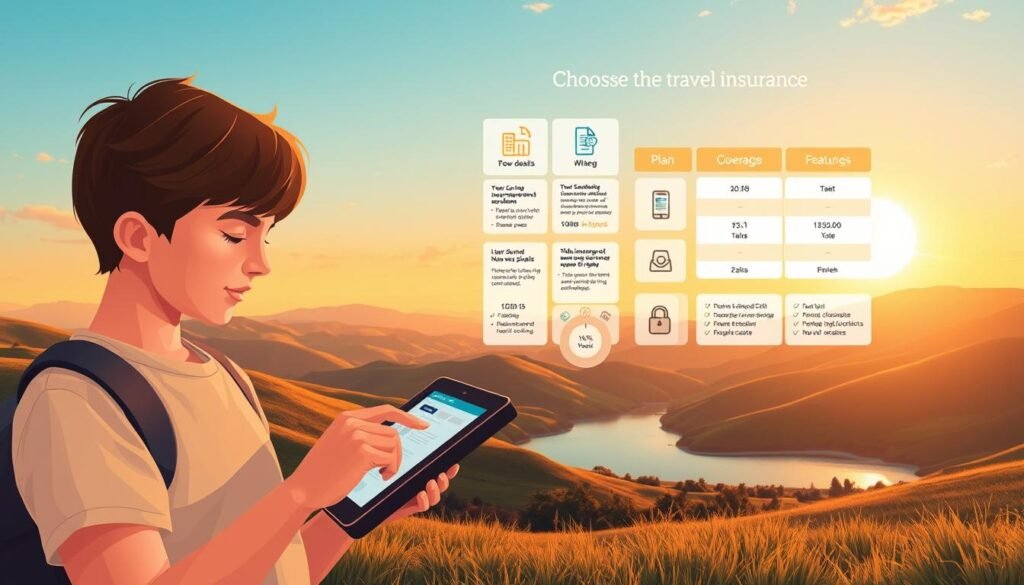
Match trip length, budget, and activities to coverage
Map your days and destinations. Longer semesters often need higher medical and evacuation limits. Short study tours may be fine with basic trip protections.
Factor in planned activities skiing, scuba, or adventure sports often require riders or specialty plans.
Annual, multi-trip, and single-trip options
- Annual plans suit frequent flyers but watch per-trip day caps (Allianz AllTrips: up to 45 days; some providers up to 90 days).
- Multi-trip policies can save costs if you take several short journeys in a year.
- For a single, long stay, pick a robust single-trip or a global health plan with strong medical limits.
| Option | Best when | Typical limit note |
|---|---|---|
| Annual / Multi-trip | You travel several times a year | Per-trip cap (45–90 days) |
| Single-trip comprehensive | One long semester or gap year | Higher medical & evacuation limits |
| Global student health | Extended study with visa needs | Annual medical focus, often visa-ready |
| Same-day/split options | Last-minute departures | Pack N’ Go / AIG Travel Guard type coverage |
What coverage includes: medical care, evacuation, trip cancellation, and more
Knowing what each benefit pays for helps you avoid surprise bills and denied claims when you need care most.
Medical expenses and emergency evacuation explained
Travel medical covers eligible doctor visits, ER care, hospital stays, and prescriptions. Confirm per-incident and aggregate limits so you don’t face high out-of-pocket expenses.
Emergency evacuation pays to move you to an adequate facility or home when local care isn’t enough. That can be the difference between safe, timely treatment and a serious safety risk.
Cancellation, interruption, and delay
Trip cancellation reimburses prepaid, nonrefundable costs when a covered cancel reason applies. Trip interruption covers getting you home and unused trip portions when you must cut the trip short.
Delay benefits pay for hotels, meals, and essentials after the stated waiting period (often 5–12 hours).
Baggage and missed connections
Baggage coverage replaces lost, stolen, or damaged items; baggage delay pays for immediate essentials. Missed connection benefits reimburse extra costs to rejoin your group after qualifying delays like bad weather or carrier issues.
- Tip: Consider CFAR within 14–21 days of your deposit if you want broader cancellation rights.
- Always read the policy to learn exclusions, sublimits, and how to file a claim.
Standard travel insurance vs. international student health plans
Deciding between a short-term policy and a global health plan comes down to how long you'll be away and the type of care you'll need.
Short-term policies focus on trip protections like cancellation, baggage, and delay. They often include emergency medical with no deductible and quick payouts. Choose this option when your stay is under 90 days and you need strong pre- and post-departure coverage.
When to choose a global health plan
Global plans act like domestic health coverage. They add deductibles, copays, preventive services, and mental health benefits. They also offer much higher medical limits, which helps on long semesters or multiple-country stays.
Deductibles, preventive care, mental health, and visit limits
Key trade-offs:
- Standard: strong trip protections, usually no deductible.
- Global: ongoing care, prescriptions, counseling, but with copays and deductibles.
- Combine a light trip policy with a global health plan when you need both sets of benefits.
"Match your choice to length and daily needs medical continuity matters more on longer programs."
| Feature | Standard policy | Global health plan |
|---|---|---|
| Cancellation & baggage | Strong | Limited |
| Deductible & copay | Usually none | Yes |
| Preventive & mental health | Minimal | Included |
| Best when | Short stays & single trips | 90+ day semesters and ongoing care |
Best student travel insurance companies and who they’re for
Not all companies fit every program some prioritize fast digital claims, others long‑stay medical limits.
Faye is app‑first. Most claims clear within 48 hours and you can get instant payouts to Apple/Google Pay. It also stores documents and offers eSIM help.
AXA Assistance USA is budget friendly. A Silver tier starts near $16 (medical $25k; baggage $750). Upgrade to Platinum for sports rental and lost ski-day coverage.
USI Affinity suits long trips. WorldMed supports up to 364 days, offers $250k emergency medical, and no urgent‑care deductible or copay.
- Travel Guard helps with last‑minute changes via Pack N’ Go and single‑occupancy reimbursement.
- Allianz excels at cancellation protections (CFAR up to 80% via agents) and adds epidemic and adventure riders.
- Berkshire Hathaway targets adventure: skydiving, scuba, rental car collision, and same‑day digital payouts.
"Read full plan documents to confirm caps, waiting periods, and exclusions before you decide."
| Company | Best if you need | Standout |
|---|---|---|
| Faye | Fast claims | Instant payouts |
| AXA | Low costs | Cheap Silver plan |
| USI Affinity | Long trips | 364‑day WorldMed |
Adventure sports and high-risk activities: what’s covered
Not every policy protects extreme activities automatically. Before you book, confirm whether your chosen plan lists specific sports or needs a rider. This step avoids denied claims if you get hurt while skydiving or diving.
Berkshire Hathaway offers an adventure package that covers skydiving, bungee, ziplining, and scuba. It includes $50,000 emergency medical and $500 for sports equipment in transit, plus same-day digital claims payments.
World Nomads covers 200+ activities and lets you extend mid-trip. Its standard plan includes evacuation up to $300,000 but does not offer CFAR or a pre-existing waiver.
- Many standard plans exclude risky sports without an add-on—verify the activity list.
- Check evacuation limits for remote or mountainous trips; higher evacuation funding can be critical.
- Confirm rules: dive depth, altitude, certified guides, and equipment receipts may affect claims.
| Provider | Key adventure covers | Evacuation limit | Equipment transit |
|---|---|---|---|
| Berkshire Hathaway | Skydiving, bungee, zipline, scuba | $50,000 medical (evacuation varies) | $500 |
| World Nomads | 200+ activities; mid-trip extensions | Up to $300,000 | Varies by plan |
| Typical standard plans | Limited or excluded high-risk sports | Wide variation; check limits | Often low or excluded |
Pre-existing medical conditions and mental health considerations
Buy early and document stability: that simple action often unlocks a pre-existing condition waiver and keeps care covered while you're away.
Timing is the headline rule. Many waivers require you to purchase within 14–21 days of your initial trip deposit. Meet that window and you may preserve claims eligibility for conditions you already manage.
Pre-existing condition waivers and timing rules
Waivers protect claims tied to known conditions but come with strict rules. Insurers check medical stability, recent visits, and the look-back period. Read definitions of "pre-existing" closely phrasing varies across policies.
When mental health is covered under travel vs. global health plans
Standard travel policies often pay mental health claims only after a formal diagnosis or hospitalization. Some require a minimum three-day inpatient stay.
Global health plans are likelier to include ongoing counseling, prescriptions, and routine visits—useful during a long semester or multi-month program.
- Keep doctor notes, prescriptions, and change-of-med documentation.
- Verify psychiatric evacuation rules before you go.
- Consider pairing a global health plan with a trip policy to cover both ongoing care and cancellation or baggage needs.
"Purchasing on time is the number one factor in accessing these protections."
| Issue | Standard policy | Global plan |
|---|---|---|
| Pre-existing waiver window | Typically 14–21 days | Often included in annual coverage |
| Mental health routine care | Limited or hospitalization-based | Included; multiple visits allowed |
| Evacuation for psychiatric emergency | Check authorization criteria | Usually covered under medical evacuation |
Cancel For Any Reason (CFAR) and Interruption For Any Reason (IFAR)
Cancel-any-reason options widen what counts as an eligible cancel reason. They let you reclaim part of prepaid, nonrefundable trip costs when plans change for reasons the normal policy won’t cover.
Key rules to know:
- Purchase CFAR within 14–21 days of your initial deposit to qualify.
- Expect CFAR to add roughly 50% to your premium; reimbursements range from 50%–80% of nonrefundable costs.
- Most providers require you to cancel at least 48 hours before departure to receive CFAR benefits.
Common reimbursement examples: Allianz can offer up to 80% via agents, AXA up to 75%, USI Affinity up to 70%, while Travel Guard and Berkshire Hathaway typically reimburse around 50%.
IFAR is less common but useful if you must cut a trip short. Companies such as WorldTrips, IMG, and PrimeCover may offer partial reimbursement when listed triggers force an early return.
Is CFAR worth it? Yes when you have large nonrefundable deposits program fees, housing, or flights. It’s less useful for last‑minute no‑shows and adds to your overall costs.
Some states limit CFAR availability or change terms. Keep proof of booking dates and CFAR purchase days to prevent eligibility disputes.
| Provider | Purchase window (days) | Typical CFAR reimbursement | Notes |
|---|---|---|---|
| Allianz | 14–21 | Up to 80% (via agent) | Higher reimbursement when sold by agents |
| AXA | 14–21 | Up to 75% | Affordable tiers with CFAR option |
| USI Affinity | 14–21 | Up to 70% | Good for long programs and larger deposits |
| Travel Guard / Berkshire Hathaway | 14–21 | ~50% | Lower reimbursements; common in last‑minute plans |
Costs and ways students can save on travel insurance
Premiums usually track the total trip value, but several simple choices can cut your cost without losing essential protections.
Key price drivers include trip cost, your age, how long you’ll be away, and any adventure add-ons you choose.
How trip cost, age, duration, and add-ons affect price
Expect premiums of roughly 5%–7% of your trip cost. Younger travelers typically pay less than older adults for similar limits.
Longer trips and higher medical or evacuation caps raise premiums. Adventure riders increase rates too, so only buy them if you’ll actually do the activity.
Long-stay considerations for semesters
Buy early to lock in pre-existing medical waivers and avoid price swings from named storms or local advisories.
Compare per-day or per-trip limits on annual plans some cap trips at 45–90 days, which can make a single-trip plan cheaper for a semester.
- Delay and baggage: Check waiting periods benefits may start after 5 or 12 hours.
- Bundling: Pair a trip policy for cancellation and baggage with a student health plan for routine care to save money.
- Shop smart: Compare at least three quotes and read sublimits; small differences in baggage or delay caps change value.
| Driver | Effect on premium | What to compare |
|---|---|---|
| Trip cost | Higher cost → higher premium (~5%–7%) | Overall trip value and refundable portion |
| Duration | Longer trips cost more | Per-trip day caps on annual plans |
| Add-ons | Raise price (adventure, CFAR) | Only add if itinerary needs them |
Top study abroad plan examples to compare
Not all products with big headline limits give the same real-world support read what each plan actually pays.
WorldTrips Atlas Journey Elevate
Highlights: Competitive pricing, $250,000 travel medical, and $1,000,000 medical evacuation. A short five-hour delay waiting period helps when flights run long.
The plan includes adventure coverage and offers IFAR and CFAR upgrades for extra flexibility.
IMG iTravelInsured LX
Highlights: $500,000 travel medical and $1,000,000 evacuation. Adds $50,000 non-medical evacuation and $10,000 search and rescue.
CFAR and IFAR options make this attractive if your schedule may change.
PrimeCover Luxe Plan
Highlights: $250,000 medical, $1,000,000 evacuation, and $100,000 non-medical evacuation. Trip interruption reimburses up to 200% in some cases.
How to compare: Look at per-benefit caps like baggage and delay, verify days limits and pre-existing waiver rules, and read full sample policies to confirm provider networks and claims speed.
| Plan | Medical | Evacuation | Extras |
|---|---|---|---|
| Atlas Journey Elevate | $250,000 | $1,000,000 | 5‑hr delay, adventure coverage, IFAR/CFAR |
| IMG iTravelInsured LX | $500,000 | $1,000,000 | $50k non-medical evac, $10k SAR, CFAR/IFAR |
| PrimeCover Luxe | $250,000 | $1,000,000 | $100k non-medical evac, up to 200% interruption |
International student health plans for extended stays
If you plan to be away for months, your health approach should mirror a domestic policy. Extended plans give routine care plus emergency support so you won't scramble for providers on short notice.
GeoBlue Navigator for Students requires a minimum three-month enrollment. It offers unlimited annual and lifetime medical maximums and $250,000 evacuation.
The plan is F1/J1 visa-ready and includes preventive care, mental health, and substance-abuse benefits. Deductibles are waived for many counseling visits, and collegiate sports plus some alcohol-impairment incidents are covered.
IMG Patriot Lite & Platinum
Patriot plans start at five days and scale to long terms. Lite covers up to $1M medical and $1M evacuation. Platinum rises to $1M–$8M medical limits with a $25,000 non‑life‑threatening evacuation benefit.
Note: mental health disorders are not covered on Patriot plans; budget accordingly if counseling is part of your care plan.
WorldTrips StudentSecure series
StudentSecure tiers are J1‑compliant with zero deductibles. Limits range from $200K/$50K to Elite at $5M/$300K. Elite adds preventive care; other tiers vary on mental‑health and sports coverage.
| Plan | Minimum days | Medical max | Evacuation |
|---|---|---|---|
| GeoBlue Navigator | 90 days | Unlimited annual & lifetime | $250,000 |
| IMG Patriot Lite | 5 days | Up to $1,000,000 | $1,000,000 |
| IMG Patriot Platinum | 5 days | $1,000,000–$8,000,000 | $25,000 (non‑life‑threatening) |
| WorldTrips StudentSecure Elite | Varies by tier | Up to $5,000,000 | $300,000 |
- Tip: Check direct billing networks, telemedicine access, and how a plan handles side trips and visa letters.
- Pair a smaller trip policy if you need cancellation, baggage, or delay coverage the health plan may not include.
Required coverage from schools and what programs actually include
Your program may list mandatory coverage, yet the included protections often stop at basic medical care.
Many study offices ask for proof of a policy, but what they provide varies widely. Some program plans include only emergency medical benefits. Cancellation, baggage, and delay are often excluded.
Always request the certificate of insurance and read the fine print. The certificate shows limits, exclusions, and whether a plan meets visa or host‑university minimums.
- If the school’s plan is medical‑only, buy your own policy to cover trip interruption, lost baggage, and delay.
- If you can waive the school plan, get written approval that your external policy meets their minimums.
- Verify networks and direct billing near your host campus to avoid large up‑front bills.
- Confirm geographic limits if your program spans multiple countries.
"Never assume a school plan covers everything; the certificate tells the real story."
| What schools often require | Common reality | What you should do |
|---|---|---|
| Proof of coverage | Shows only basic medical or emergency evac | Request the certificate and read exclusions |
| Visa compliance | May demand minimums or specific benefits | Match your policy to visa rules and get written confirmation |
| Program-provided plan | Often omits cancellation and baggage | Buy a supplemental plan if needed |
| Claims handling | Third‑party admins can delay reimbursement | Ask about timelines, direct billing, and 24/7 numbers |
Carry copies of your policy, ID cards, and 24/7 assistance numbers. Share them with your program advisor so someone can act quickly in an emergency.
Timing your purchase and documentation you’ll need
Securing a plan within days of booking can be the difference between an accepted pre-existing waiver and an out-of-pocket bill. Buy quickly to preserve CFAR and waiver windows that many underwriters require within 14–21 days of your initial deposit.
Why timing matters: early purchase often unlocks cancel-any-reason options and protects the booking date that determines eligibility. It also gives you time to read exclusions and compare costs across providers.
What to keep on hand
- Digital and printed receipts for flights, housing, and tours to prove trip value.
- Medical records, prescriptions, and doctor notes for claims related to care or interruption.
- Police reports for theft or assault and written confirmation from carriers for delays or lost baggage.
- Policy numbers, ID cards, and the 24/7 assistance phone saved on your device and in your daypack.
Claim deadlines and proof
If you change or upgrade a plan, keep dated receipts to avoid disputes about eligible days or cancel reason windows. When unsure whether an event is covered, call your assistance line before spending on alternatives.
| Action | Why it helps | What to save |
|---|---|---|
| Buy within 14–21 days | Unlock CFAR and pre-existing waivers | Purchase receipt and booking date |
| Document incidents | Supports medical or theft claims | Medical notes, police reports |
| Keep carrier confirmations | Proves delays and baggage loss | Emails, delay receipts, rebooking proofs |
Real-world scenarios: how claims and assistance work abroad
The moment you need help, an assistance line can turn confusion into clear steps. Call first—assistance teams connect you to vetted clinics, arrange translators, and can issue payment guarantees so you don’t face immediate out-of-pocket refusals.
What 24/7 assistance does:
- Finds local, English-speaking doctors and arranges referral notes.
- Coordinates emergency evacuation to an appropriate facility.
- Helps replace prescriptions, relays messages to family, and provides legal or translation support.
Digital claims, instant payouts, and payment guarantees
Use your app or web portal to upload receipts, police reports, and doctor notes. Apps speed the process and reduce paperwork.
Some companies move fast: Faye often clears many claims within 48 hours and sends instant payouts to Apple Pay or Google Pay. Berkshire Hathaway can deliver same‑day digital payments, which helps if you must cover emergency expenses like lodging or gear.
How common scenarios play out
- If you’re injured, call assistance first; they’ll guide you to care and arrange payment guarantees so hospitals treat you immediately.
- For serious emergencies, the team coordinates evacuation and handles logistics with local providers and airlines.
- If a delay or missed connection triggers benefits (some policies start at a 5‑hour threshold), your plan may pay for hotels and meals up to stated limits.
- For baggage loss, file a property irregularity report with the carrier, keep receipts, then submit the airline report and photos to your claim portal.
"Log every call and save names, dates, and advice clear records speed approvals and avoid disputes."
| Situation | What assistance does | What you should save |
|---|---|---|
| Minor injury / clinic visit | Referral, translator, payment guarantee | Clinic bill, prescription, assistance case number |
| Major emergency / evacuation | Coordinate medevac, arrange transfer, notify family | Hospital records, evacuation authorization, receipts |
| Flight delay or missed connection | Assess eligibility, cover hotel/meals after waiting period | Carrier delay notice, boarding passes, hotel receipts |
| Lost or damaged baggage | Guide claims with airline and reimburse excess loss | Property irregularity report, photos, purchase receipts |
Your next steps to get the best student coverage today
Make a short checklist of must-have benefits: medical limits, evacuation, cancellation, baggage, and delay. Use that list to shortlist two or three plans that match your trip and costs.
Get quotes from Faye, AXA, USI Affinity, Travel Guard, Allianz, and Berkshire Hathaway and compare side by side. If you plan a long stay, weigh a global health plan plus a lean trip policy for cancellation and baggage.
Buy within 14–21 days of your deposit when possible to unlock CFAR and pre-existing waivers. Confirm adventure coverage if you’ll ski, dive, or climb, and check per-benefit caps and waiting periods.
Save your policy number and assistance hotline on your phone and print a copy. Share details with your program coordinator and call assistance before making costly rebookings. Lock in a plan early and go with peace of mind.
Master Your Money in 2026
Learn budgeting, banking, credit building, savings, and investing with expert guides designed for students and young professionals.
Best Renters Insurance USA International Students: Top Picks

Master Student Budgeting Tips: Save Money Quickly

Learn How to Save Money Fast: Students' Top Tips

Compare the best student savings account UK banks for your needs

Best Savings Account for International Students in Canada

Best high yield savings account USA 2026: Top Picks for You
Go up
Leave a Reply